

Where did the Estonian ferry disappear to?
09 Oct., 2026, press release
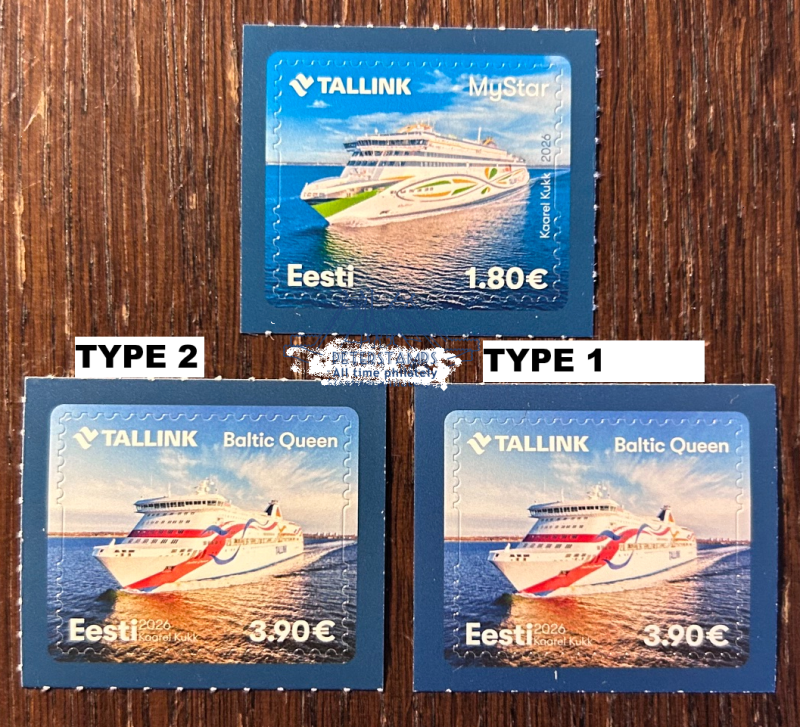
On June 25, 2026, Omniva—Estonia’s main postal operator—issued a set of two stamps dedicated to the "Giants of the Baltic," the modern ferries of the Tallink fleet. Collectors who closely follow Estonian philately immediately noted the absence from sale of the "higher-value" 3.90-euro stamp featuring a "Baltic Queen" ferry. In the official announcement from Omniva, the print runs for the stamps were stated as follows: the first ferry (face value €1.80) — 100,000 copies, while the second (€3.90) — only... 3,000 (!). While a philatelist could rest easy regarding the first—"lower-denomination"—stamp—as the issuer had correctly set a print run of 100,000 (10,000 sheets) for this country and popular theme—the second stamp caused considerable anxiety; after all, a mere 300 small-format sheets for Estonia was not just a small quantity—it was negligible! Such a print run did not align with steady demand, and the issue bore all the hallmarks of a deliberately speculative release
The customary announcement of new stamps in Estonia appeared about a week before the First Day of Issue. All that remained was to wait for the big moment. And what did collectors see when they arrived at Tallinn’s main post office on June 25? Only 100 stamps with a face value of 3.90—that is, just 10 sheetlets—were released for general sale, and, naturally, they sold out instantly. "Mr. Director of Omniva, where are the other 2,900 copies?"—this reasonable question hung in the air. Perhaps they have been fairly distributed among all the country's post offices? Could one go to a different post office, travel to another city, and buy one? Could one perhaps order them online? The answer was silence. They simply weren't for sale—and that was that. One could only speculate
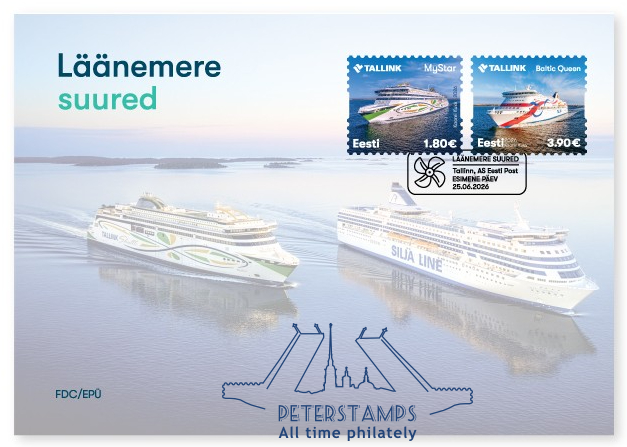
That same day, the Tallink shipping company’s headquarters hosted a flashy presentation of the stamp set, where journalists were told about a successful and innovative joint project between "sailors and postmen." At that very moment, a significant portion of the print run—comprising stamps that had instantly become rarities—was "removed" from the collector's market thanks to this "successful" collaboration. Then came two months of summer holidays, and Omniva’s management chose silence over openly admitting the mistake and rectifying the situation
On September 18, 2026, an additional printing of the €3.90 ferry stamp went on sale; it was not until a week later, on September 25, that Omniva released official information announcing the second issue and specifying its print run—5,500 copies (or 550 sheets of 10 stamps). No explanation was given for the need for an additional print run, nor was there any official acknowledgment of the error or any explanation whatsoever. And these stamps are still not—and will not be—available for purchase at post offices
Recently, changes have been taking place in Estonia’s state philatelic sector—unfortunately, for the worse. Under the pretext of cost-cutting, competent staff members were dismissed—people with years of experience who possessed an excellent grasp of both the business itself and marketing. Now, we are witnessing the consequences of having amateurs, rather than professionals, take charge of this complex and specialized field. For 35 years, Estonia painstakingly built—step by step, year by year—an esteemed and distinguished reputation in the international philatelic world. How easily that reputation can be lost when incompetence takes the lead! Consequently, not only was the reputation damaged, but the primary goal of this entire "scheme"—generating revenue—was also not achieved. In truth, such revenue was never a realistic prospect; the proceeds from the sale of this limited-edition stamp were negligible compared to the budget of a major company
So why was all this done? Clearly, Omniva’s management needed a high-profile project featuring the flagship not only of the Estonian fleet but of the entire national economy. Philately had little to do with it. Judging by the planning, the presentation, and the entirely predictable consequences, Omniva failed to consult with relevant experts—and ended up embarrassing themselves
And now, some information for collectors regarding the differences between the first and second print runs of the €3.90 stamp
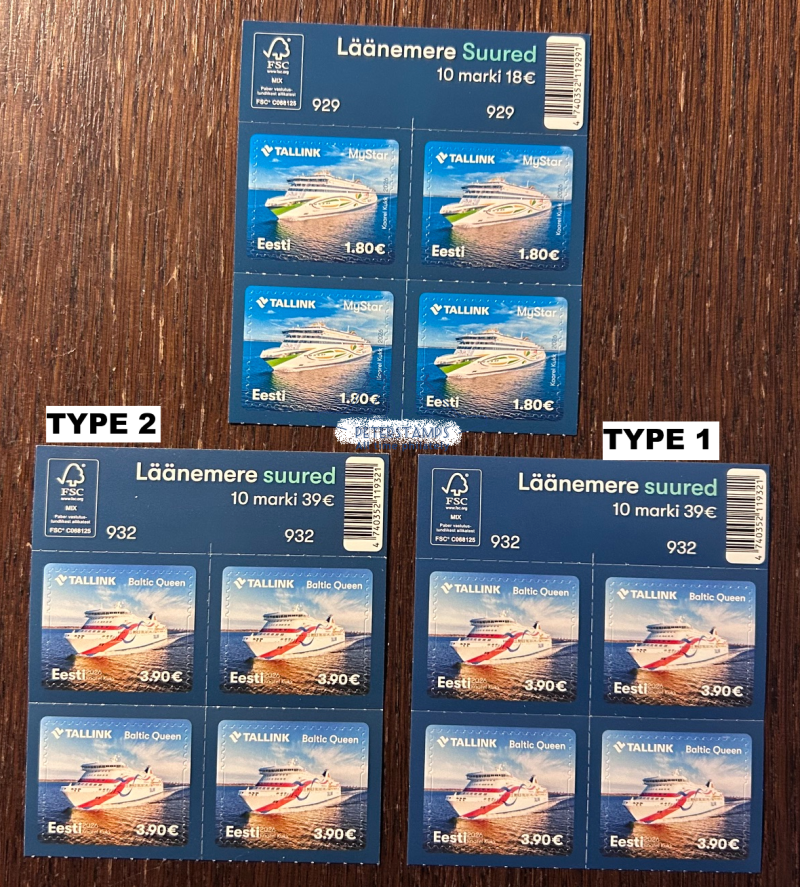
To the naked eye, the stamps can be distinguished from one another only by the shade of the frame's background color. The first type is lighter, leaning towards blue, while the second is darker, leaning towards ultramarine. The first stamp has a bright sheen, whereas the second has a finish closer to matte. They are easily distinguishable from each other when placed side by side. Based on the data in the sheet margins (barcode, issue number, etc.), the first and second print runs are identical. However, high-magnification examination (greater than 7x) reveals significant differences, particularly in the ink micro-dots and the edges of the lettering
The first printing TYPE 1 of the higher-value stamp featuring the *Queen of the Baltic* ferry has already become a great rarity, especially as a full sheet. We have only a few copies available for sale
Oleg Vladimirskiy
Philatelic developer, expert, official agent of Estonian post on the international market since 1995